Packaging operations are under more pressure than ever.
Manufacturers, distribution centers, and fulfillment operations are navigating rising labor costs, labor shortages, dimensional weight pricing increases, sustainability expectations, and ongoing uncertainty around tariffs and global supply chains. At the same time, many organizations are being asked to improve throughput and reduce cost-to-serve without adding operational complexity.
For companies evaluating packaging automation, recent U.S. tax legislation commonly referred to as the One Big Beautiful Bill (OBBBA) may significantly improve the financial case for investing now.
By restoring and expanding several pro-investment tax provisions, the legislation creates an opportunity for businesses to accelerate automation projects while improving near-term cash flow and long-term operational efficiency.
Why Packaging Automation Has Become a Strategic Priority
Manual packaging processes create hidden operational costs that compound over time. Labor-intensive packing operations can struggle with workforce variability and turnover, while oversized boxes drive higher DIM charges and shipping costs. Excess corrugated and void fill increase material consumption, and manual processes often create bottlenecks that limit throughput. At the same time, many organizations face growing pressure to reduce waste and support sustainability goals.
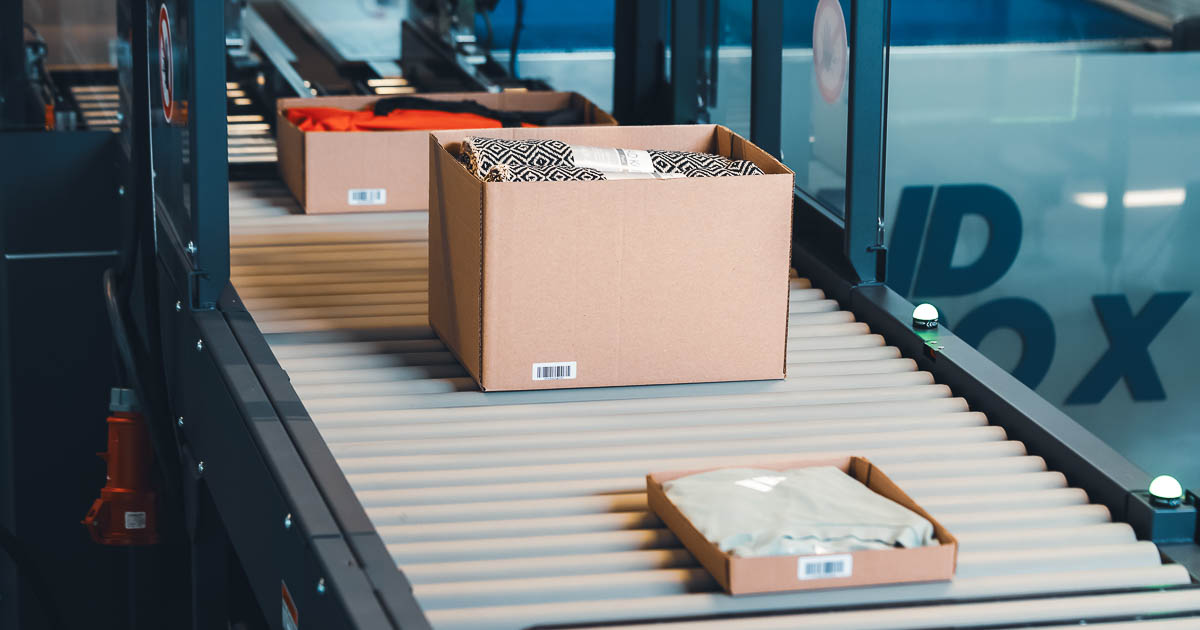
Automated, right-sized packaging addresses many of these challenges simultaneously by creating custom-sized boxes on demand for each shipment. For high-volume fulfillment operations, this approach can help standardize packaging workflows while reducing unnecessary material and shipping costs at scale.
For many operations, the result is lower corrugated consumption, reduced parcel shipping costs, less void fill, improved throughput, and reduced reliance on manual labor. Together, these gains can create a more efficient and predictable packaging operation.
As fulfillment and manufacturing environments become more complex, packaging automation is increasingly being evaluated as a strategic infrastructure investment rather than a standalone packaging upgrade.
How the One Big Beautiful Bill Supports Automation Investment
The legislation reinforces several tax provisions that directly benefit investments in automation and capital equipment, including:
- 100% bonus depreciation for qualifying equipment
- Expanded Section 179 expensing limits
- Favorable treatment for capital investments in production infrastructure
- Immediate expensing provisions for qualifying R&D activities
For organizations purchasing automation equipment, these provisions may allow a significant portion — or potentially all — of the investment to be deducted in the year the equipment is placed into service, rather than depreciated over multiple years.
This can materially improve project economics by:
- Lowering after-tax investment cost
- Improving near-term cash flow
- Compressing payback timelines
- Increasing projected IRR
- Reducing the financial risk of modernization projects
These financial advantages are important, but they only tell part of the story.
Increasingly, organizations are investing in automation not simply because the economics are more attractive, but because automation helps reduce operational risk in an uncertain business environment.
For many organizations, the conversation has shifted from “Can we afford to automate?” to “Can we afford not to?”
Packaging Automation as a Risk Reduction Strategy
While the tax advantages are meaningful, many companies are investing in automation for a broader reason: operational resilience.
Labor markets continue to fluctuate. Parcel and DIM pricing continue to rise. Supply chain strategies are evolving in response to tariff pressure and regional sourcing shifts. At the same time, operations leaders are being asked to improve service levels while controlling costs.
Automation helps organizations reduce exposure to these variables by creating more standardized, scalable operations.
For example, automated right-sized packaging can help companies:
- Reduce labor dependency in fulfillment and packaging operations
- Lower freight exposure through smaller parcel sizes
- Minimize corrugated and void fill consumption
- Improve packaging consistency and reduce damage rates
- Support ESG and sustainability initiatives through waste reduction
Supply chain flexibility also matters. Companies with regional manufacturing and support capabilities are often better positioned to help customers mitigate tariff exposure, reduce lead time pressure, and improve deployment responsiveness across North America and Europe.
A Practical Example
Consider a fulfillment operation shipping thousands of orders per day. During peak season, hiring and retaining enough packaging labor becomes increasingly difficult, while parcel carriers continue to apply dimensional weight pricing to oversized shipments.
By automating the packaging process and producing right-sized boxes on demand, the operation can reduce labor dependency, decrease corrugated consumption, and ship smaller parcels. The result is a packaging operation that is not only more efficient, but also better positioned to adapt to labor fluctuations and rising transportation costs.
When combined with accelerated expensing provisions available through the OBBBA, the project economics can improve substantially in year one through both immediate tax savings and ongoing operational cost reductions.
For many organizations, this creates a stacked ROI effect.[GH1.1] Tax advantages can improve project economics upfront, while operational improvements continue to generate value over time.
Packsize customers commonly report measurable operational improvements after implementing right-sized packaging automation, including average corrugated savings of up to 30%, package size reductions of 40% or more, and void fill reductions averaging 80%. In some applications, automation can also help eliminate up to 20 manual pack stations per machine.
Those savings can translate directly into lower material costs, reduced parcel shipping expenses, and improved operational efficiency.
When operational savings are layered on top of accelerated tax advantages, packaging automation projects may achieve payback timelines that are significantly shorter than many traditional capital investments.
Why Timing Matters
Many tax advantages depend on when equipment is placed into service, not simply when it is ordered.
As a result, companies evaluating packaging automation should consider:
- Deployment timelines
- Scalability of the solution
- Operational readiness
- Integration complexity
- Speed to value
Solutions that are modular, flexible, and designed for faster implementation may help organizations better align automation investments with desired fiscal timelines and operational objectives.
Looking Beyond Tax Incentives
Tax policy may help accelerate investment decisions, but the underlying operational pressures driving packaging automation are likely to remain.
Organizations continue to look for ways to improve EBITDA performance, reduce cost-to-serve, increase operational leverage, protect against labor volatility, and reduce freight and packaging costs while continuing to advance sustainability initiatives.
For many manufacturers and fulfillment operations, automated, right-sized packaging is becoming part of a broader strategy to build more efficient, resilient, and scalable supply chains.
Final Thought
Recent U.S. tax legislation has changed the financial landscape for capital investment in automation.
For organizations already facing rising packaging, labor, freight, and operational costs, the combination of accelerated tax advantages and measurable operational savings may create a unique opportunity to modernize packaging operations while building a more efficient and resilient operation for the future.
As always, companies should consult with their tax and financial advisors regarding how these provisions apply to their specific acquisition structure and business situation.